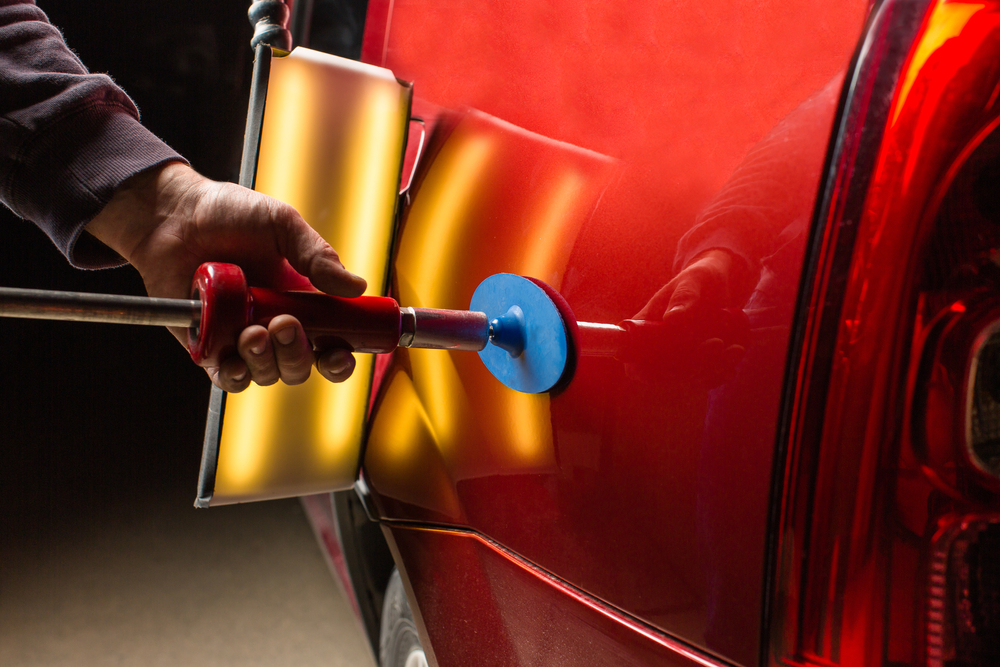

The modern quest for car dent repair has evolved dramatically over the past decades, moving from traditional hammering techniques to sophisticated paintless methodologies that preserve the original factory finish while restoring a vehicle’s aesthetic integrity.
The Historical Trajectory of Dent Repair
From a historical perspective, the relationship between humans and their vehicles represents a fascinating chapter in our technological evolution. For most of automotive history, repairing body damage meant extensive work: dismantling panels, applying fillers, sanding surfaces, and repainting large sections—a process that was time-consuming, expensive, and often resulted in a finish that differed from the original.
This traditional approach remained largely unchanged for nearly a century until the 1980s when a new methodology emerged that would fundamentally alter our approach to vehicle aesthetics.
The Cognitive Shift: Paintless Dent Repair
Understanding the Revolution
Paintless Dent Repair (PDR) represents not merely a technical innovation but a cognitive shift in how we conceptualise damage and restoration. Rather than replacing or reconstructing damaged material, PDR works with the existing panel, manipulating it through precise pressure applications to restore its original form.
This approach mirrors other evolutionary adaptations in human technology: working with natural properties of materials rather than against them, preserving rather than replacing, and minimising resource expenditure while maximising outcomes.
As Singapore-based dent repair specialist Tan Wei Liang notes: “PDR represents a philosophical shift as much as a technical one. We’re no longer fighting against the metal’s properties but working with them. It’s restoration in the truest sense.”
The Technological Methodology
The Science Behind the Process
The modern PDR process employs several sophisticated techniques:
- Metal memory exploitation—utilising the panel’s natural tendency to return to its original shape
- Specialised lighting systems that create shadow patterns revealing microscopic variations in panel surfaces
- Custom-designed tools that apply precise pressure from behind the dent
- Temperature manipulation that alters metal malleability during the repair process
This methodological approach shares more with microsurgery than traditional auto body repair, requiring practitioners to develop acute spatial awareness and tactile sensitivity that can take years to master.
The Economic Calculus
Comparative Analysis of Repair Options
From an economic perspective, the emergence of PDR has fundamentally altered the cost-benefit analysis of minor body repairs. Traditional methods typically cost 3-5 times more than PDR techniques, require longer vehicle downtime, and often impact resale value due to diminished originality.
As one Singapore vehicle appraiser observes: “A vehicle with original paint maintains approximately 5-7% higher value than one with significant repainting, even when the repaint work is professionally executed. The market consistently values originality.”
This economic reality creates an interesting parallel with other technological disruptions throughout human history—innovations that simultaneously reduce resource expenditure while improving outcomes invariably replace their predecessors, regardless of entrenched practices.
The Psychological Dimension
The Emotional Relationship with Vehicles
The human-vehicle relationship transcends mere functionality. For many, vehicles represent significant personal investments, both financial and emotional. Dents and imperfections create cognitive dissonance between the ideal conception of our possessions and their actual state.
This psychological discomfort drives our desire for restoration—a pattern that extends far beyond vehicles to all objects with which we form emotional attachments. Singapore-based automotive psychologist Dr Mei Lin observes: “Our vehicles often serve as external representations of our identities. Damage to them can feel personally distressing in ways that transcend rational economic calculations.”
The Environmental Dimension
Sustainability Considerations
The environmental impact differential between traditional and PDR methods deserves consideration:
- Traditional repairs generate paint waste, and chemical solvents, and often involve replacement parts
- PDR eliminates nearly all material waste
- Energy consumption is substantially reduced without heating, curing, and ventilation requirements
- No VOCs (Volatile Organic Compounds) are released into the atmosphere
In our contemporary context of increasing environmental consciousness, this aspect of PDR adds another dimension to its evolutionary advantage over conventional methods.
The Limitations of Technology
Understanding Boundaries
Like all technologies, PDR exists within certain constraints. Sharp creases, damage near panel edges, and severely stretched metal can challenge even the most skilled practitioners. Additionally, damage that has compromised the paint surface remains outside PDR’s domain.
This pattern of technological specialisation—tools that excel at specific tasks rather than serving as universal solutions—reflects the broader pattern of technological evolution throughout human history. Specialisation almost invariably outperforms generalisation when conditions allow.
The Consumer Decision Framework
Making Informed Choices
For vehicle owners contemplating dent repair, several considerations should inform their decision-making:
- Damage severity and location on the vehicle
- Age and value of the vehicle
- Long-term ownership intentions
- Insurance coverage considerations
- Environmental values and preferences
This decision framework reflects our broader relationship with technological choices—balancing immediate needs against long-term considerations, economic factors against aesthetic ones, and convenience against quality.
The Future Trajectory
The evolution of dent repair technologies continues, with emerging hybrid techniques that combine elements of PDR with minimally invasive conventional approaches. As vehicles increasingly incorporate aluminium, carbon fibre, and composite materials, repair methodologies will necessarily adapt.
This constant adaptation mirrors the broader pattern of technological evolution—each innovation creating new challenges that stimulate further innovation in an endless cycle of improvement and specialisation.
For vehicle owners today, understanding these options represents not merely a practical concern but participation in the ongoing evolution of how humans maintain and preserve their technological creations. As we move forward, the intelligent application of appropriate technologies will continue to define our relationship with vehicles and the specialised field of car dent repair.
 Auto Pulse Car Blog
Leave a comment